Yiyuan (Eric) ZHANG, PhD at National University of Singapore
Passionate about Bio-inspired and Soft Robotics
Keyword: Bioinspiration, Physical and Embodied Intelligence
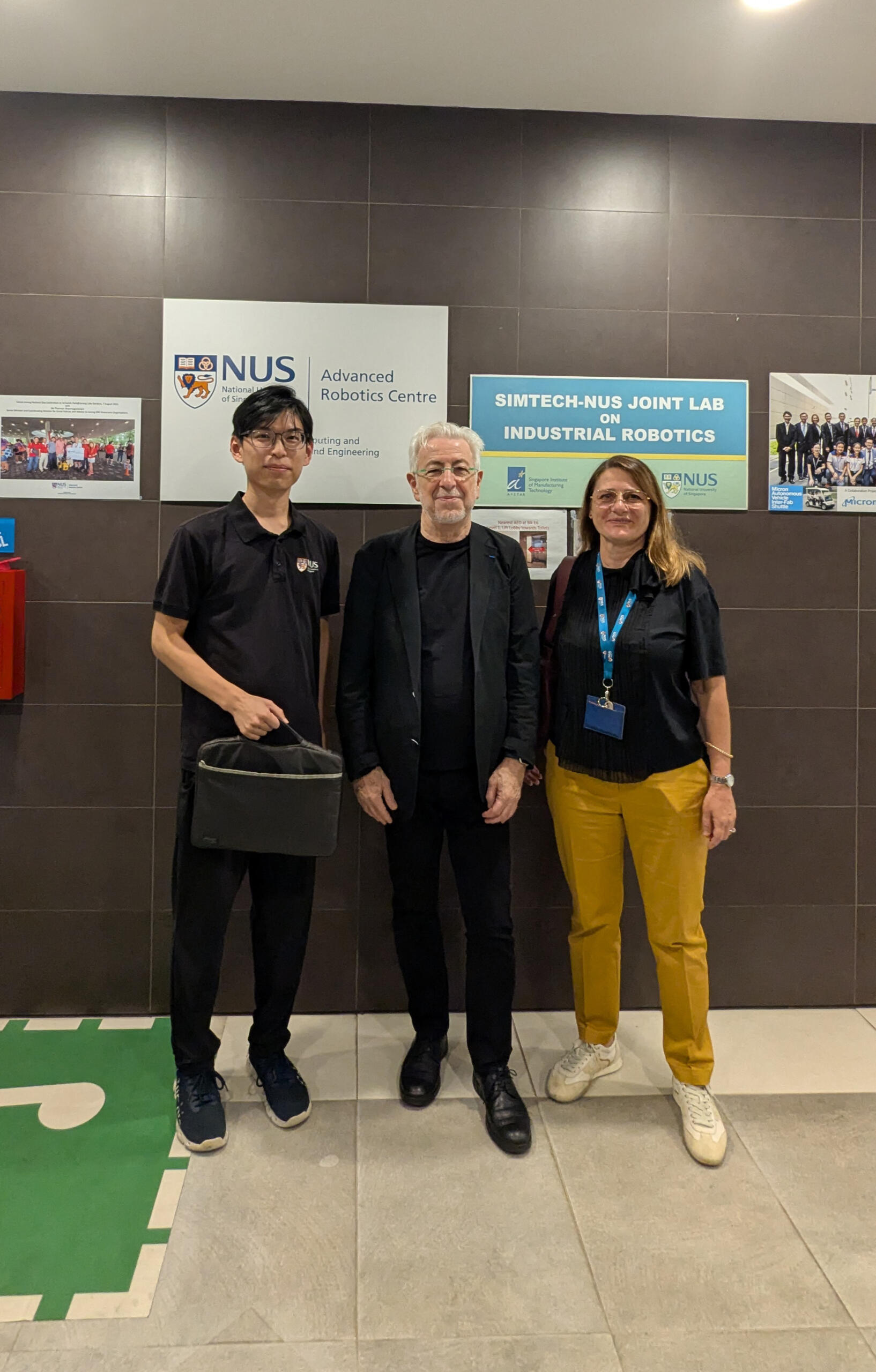
Photo with PhD Supervisor Prof. Cecilia Laschi (National University of Singapore) and International Advisor Prof. Oussama khatib (Stanford University)
Education
| Ph.D. | National University of Singapore, Mechanical Engineering | Aug 2022 – Aug 2026 |
| B.Eng. | Beihang University (China), Mechanical Engineering | Sept 2017 – Jun 2022 |
| Exchange | RWTH Aachen University (Germany), Mechanical Engineering | Oct 2019 – Mar 2020 |
Introduction
Yiyuan ZHANG is a Ph.D. supervised by Prof. Cecilia Laschi at the Soft Robotics Lab and Advanced Robotics Centre at the National University of Singapore. His doctoral studies and research are supported by the Ministry of Education Singapore and the Singapore-MIT Alliance for Research and Technology (SMART).Throughout his Ph.D. journey, Yiyuan has been fortunate to receive continuous encouragement, insightful guidance, and valuable research advice from Prof. Oussama Khatib, Director of the Stanford Robotics Center. He received his B.Eng. degree with Beijing Outstanding Graduate Honors in Mechanical Engineering from Beihang University in 2022 under the supervision of Prof. Li Wen.Yiyuan's research interests include bio-inspired robotics, soft robotics, and embodied intelligence. His co-first-authored Science Robotics paper has been featured by Science, New Scientist, China Daily, New York Daily News, and other international media outlets. His Octopus-inspired Swimming Robot been reposted by prominent robotics professionals, including the Chief Strategy Officer of Boston Dynamics, and exhibited to over 37,000 visitors at Science Centre Singapore and interviewed by Tech Xplore and CNA.He serves on the Editorial Review Board of the International Journal of Advanced Robotic Systems (IJARS) and as a Young Editor of Cyborg and Bionic Systems, a Science Partner Journal. He also regularly reviews for leading robotics journals including Nature Communications, The International Journal of Robotics Research (IJRR), IEEE Transactions on Robotics (T-RO), IEEE/ASME Transactions on Mechatronics (T-Mech), IEEE Transactions on Industrial Electronics (TIE), Advanced Intelligent Systems (AIS). He has also contributed to academic exchange within the robotics community. In particular, he invited Prof. Shuzhi Sam Ge to deliver a keynote lecture to the Singapore’s Chinese robotics community.
Scroll Down to More ↓
Selected Publications
🐙 Learning from Nature
ESI Top 1% Highly Cited Paper
Co-first author, Science Robotics
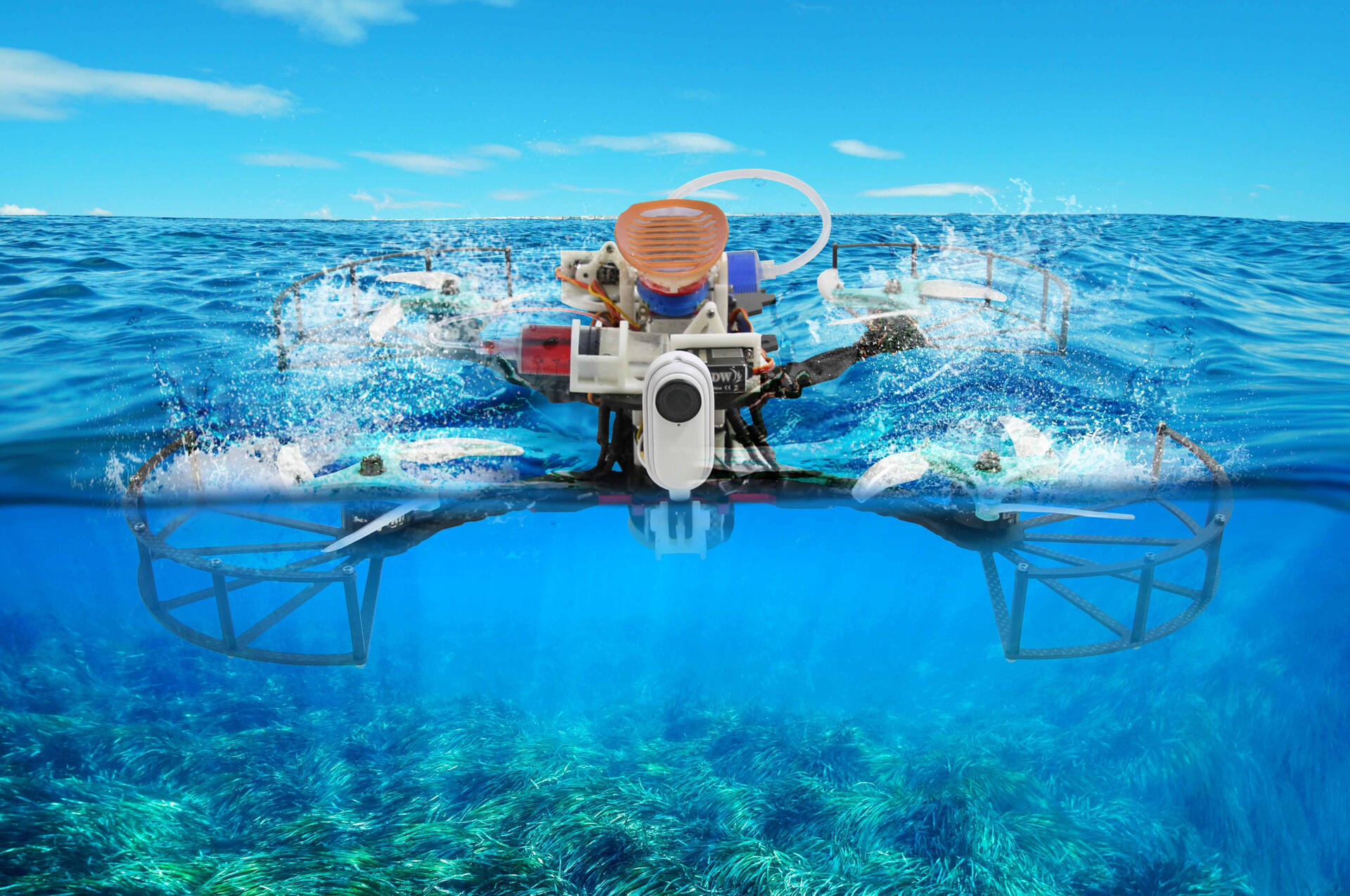
Aerial-aquatic robots capable of crossing the air-water boundary and hitchhiking on surfaces
Selected for a Single-track Oral
Corresponding author & Co-first author, RoboSoft
Octopus-like Reaching Motion: A Perspective Inspired by Whipping
IF 18.1, Q1, Robotics #2 (JCR)

Cyborg and Bionic Systems (SPJ)
Lamprey-Inspired Amphibious Suction Disc
with Hybrid Adhesion Mechanism
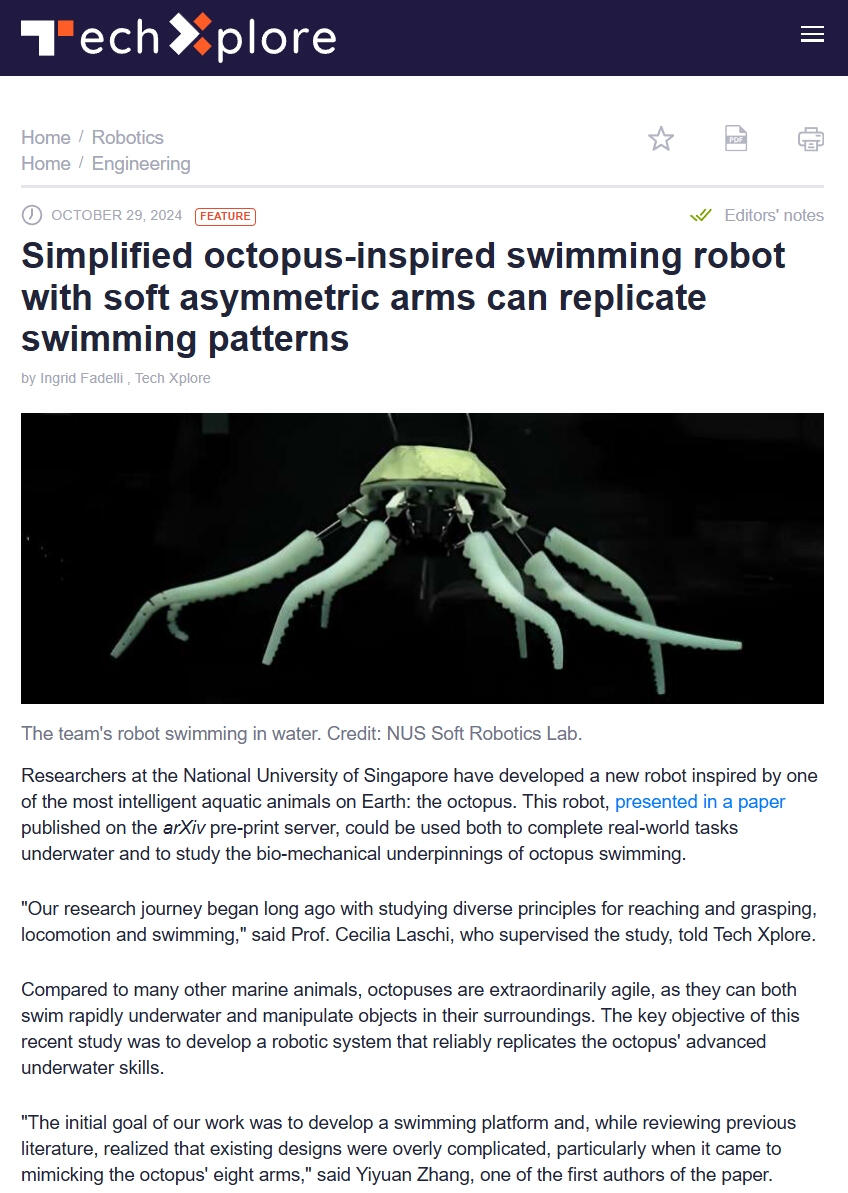
Paper in Spotlight, Featured by Tech Xplore
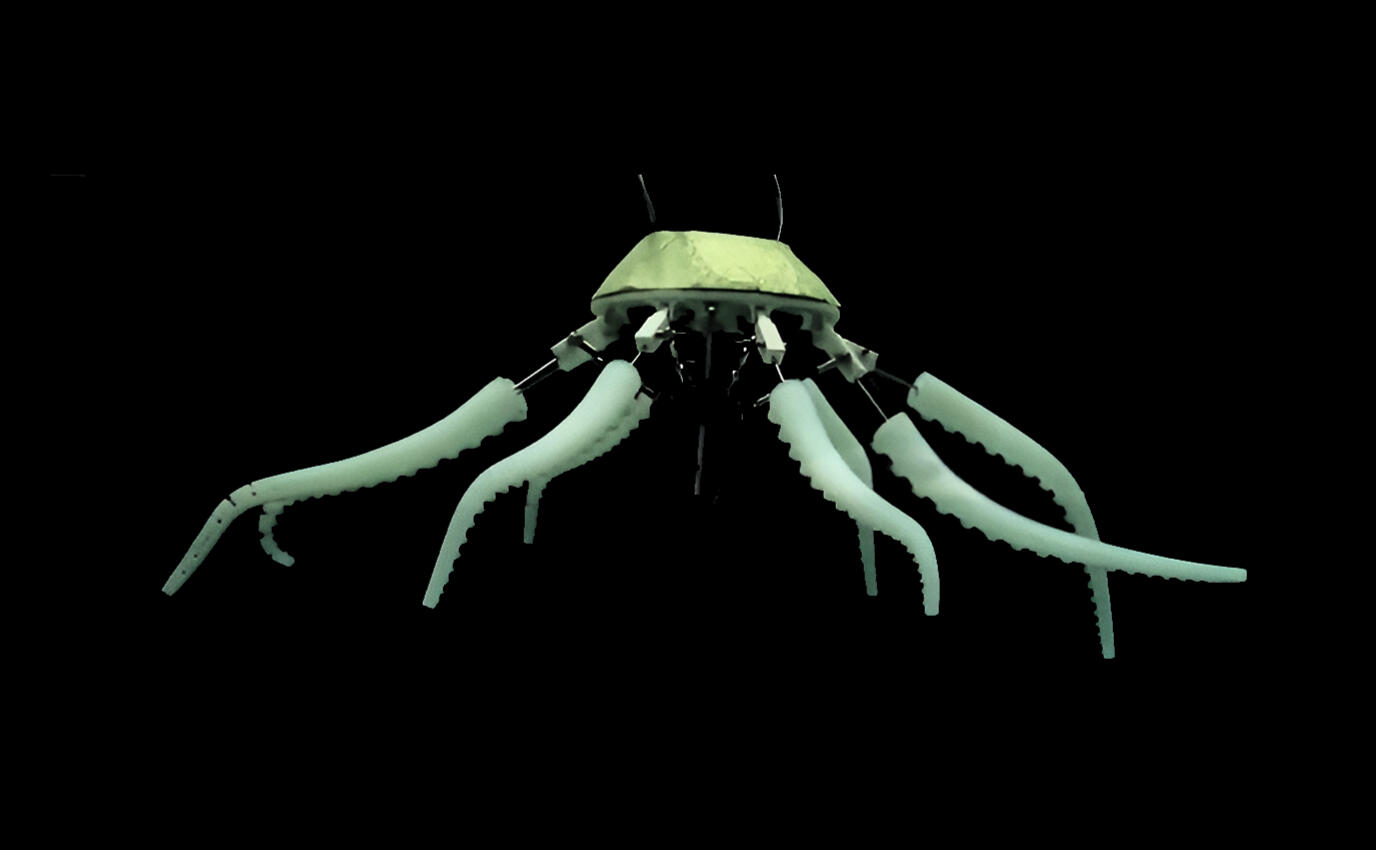
Corresponding author & Co-first author, RoboSoft
Octopus-Swimming-Like Robot with Soft Asymmetric Arms
Bachelor Thesis, Editor Highlighted Paper

Biomimetic Intelligence and Robotics
Design, fabrication, and characterization of a hydrostatic electroactive soft actuator
Beginner-Friendly, for Community
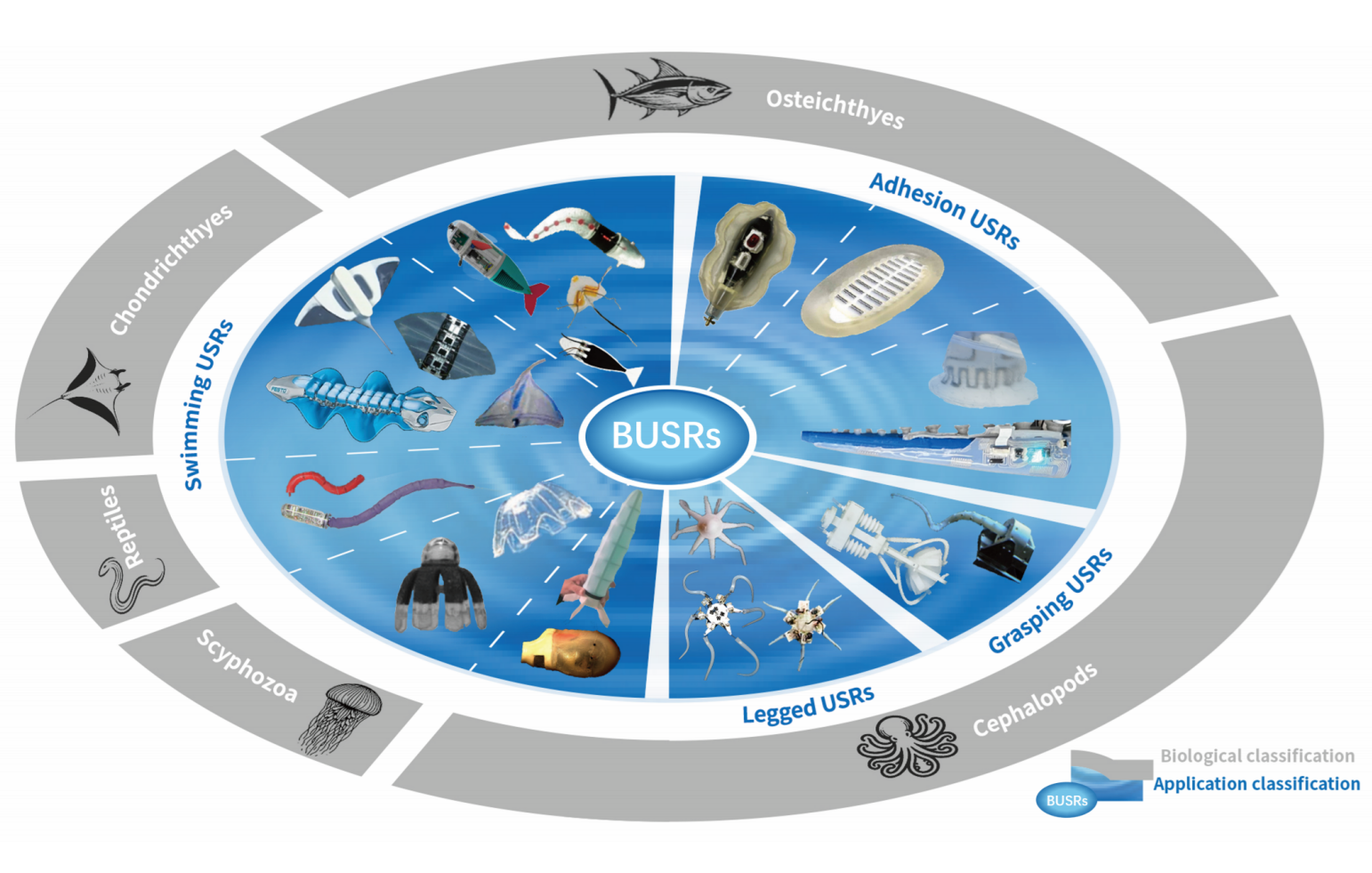
Bioinspiration & Biomimetics
From shallow waters to Mariana Trench: A survey of bio-inspired underwater soft robots
Scroll Down to More ↓
🦾 Empowering Machines with Softness

Co-first author, unpublished
Soft Responsive Materials Enhance
Humanoid Safety
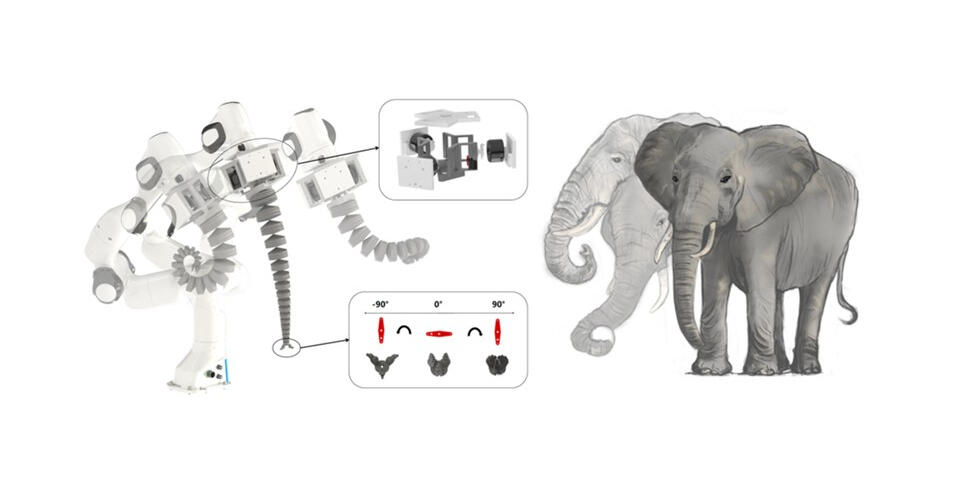
npj Robotics
Grasping by spiraling: reproducing elephant movements with rigid-soft robot synergy
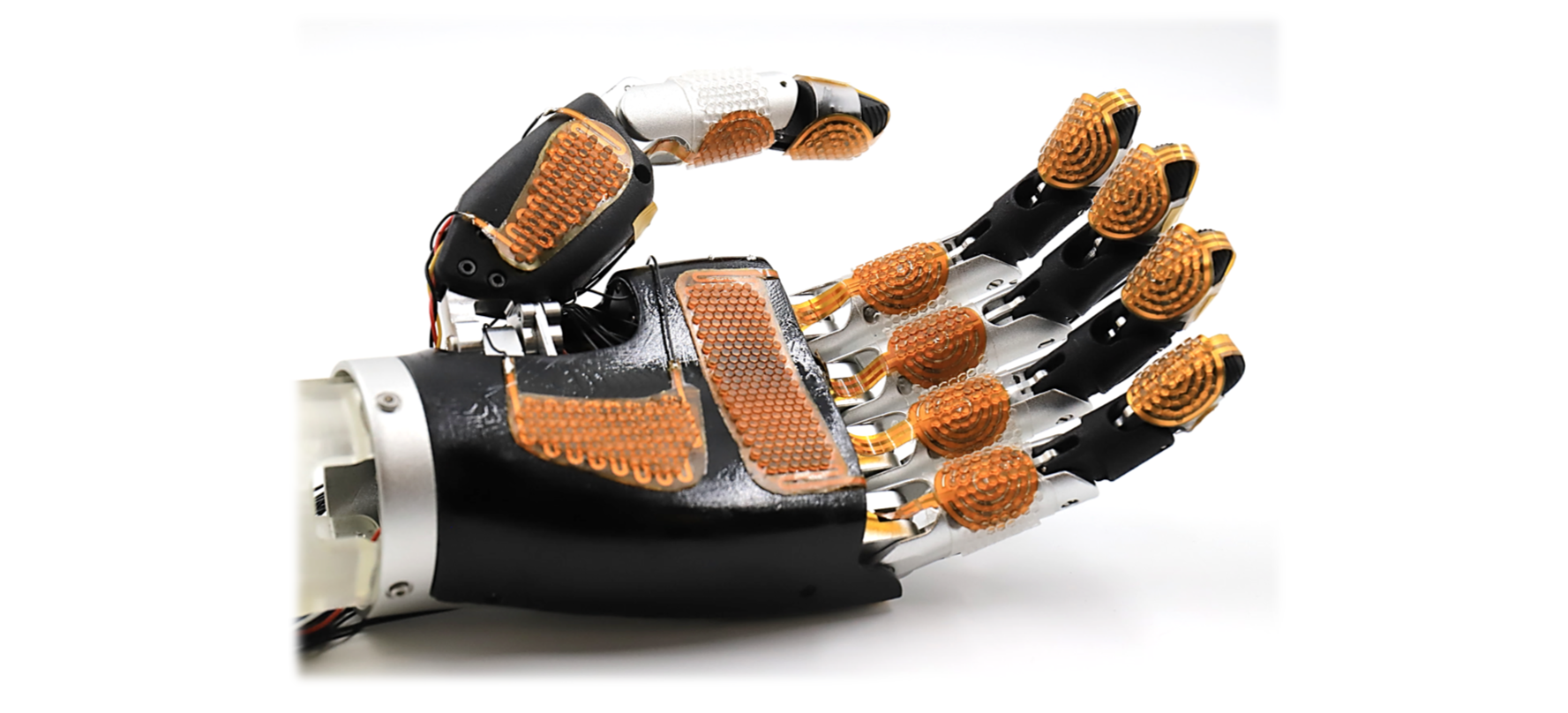
Science Advances
Versatile adhesive skin enhances robotic interactions with the environment
Aerial-aquatic robots capable of crossing the air-water boundary and hitchhiking on surfaces
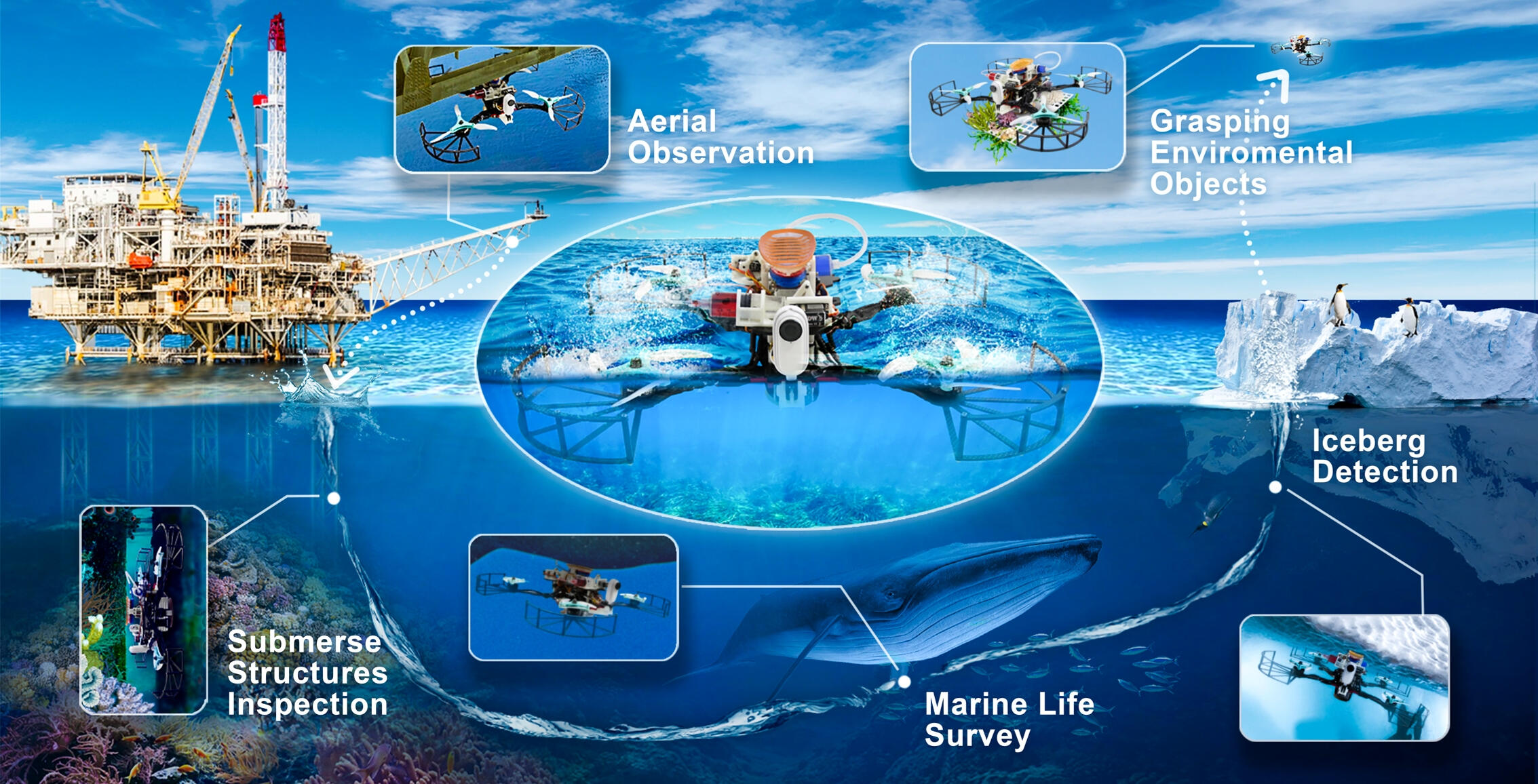
Our vision
Abstract
Many real-world applications for robots—such as long-term aerial and underwater observation, cross-medium operations, and marine life surveys—require robots with the ability to move between the air-water boundary. Here, we describe an aerial-aquatic hitchhiking robot that is self-contained for flying, swimming, and attaching to surfaces in both air and water and that can seamlessly move between the two. We describe this robot’s redundant, hydrostatically enhanced hitchhiking device, inspired by the morphology of a remora (Echeneis naucrates) disc, which works in both air and water. As with the biological remora disc, this device has separate lamellar compartments for redundant sealing, which enables the robot to achieve adhesion and hitchhike with only partial disc attachment. The self-contained, rotor-based aerial-aquatic robot, which has passively morphing propellers that unfold in the air and fold underwater, can cross the air-water boundary in 0.35 second. The robot can perform rapid attachment and detachment on challenging surfaces both in air and under water, including curved, rough, incomplete, and biofouling surfaces, and achieve long-duration adhesion with minimal oscillation. We also show that the robot can attach to and hitchhike on moving surfaces. In field tests, we show that the robot can record video in both media and move objects across the air/water boundary in a mountain stream and the ocean. We envision that this study can pave the way for future robots with autonomous biological detection, monitoring, and tracking capabilities in a wide variety of aerial-aquatic environments.
Featured in Science Magazine
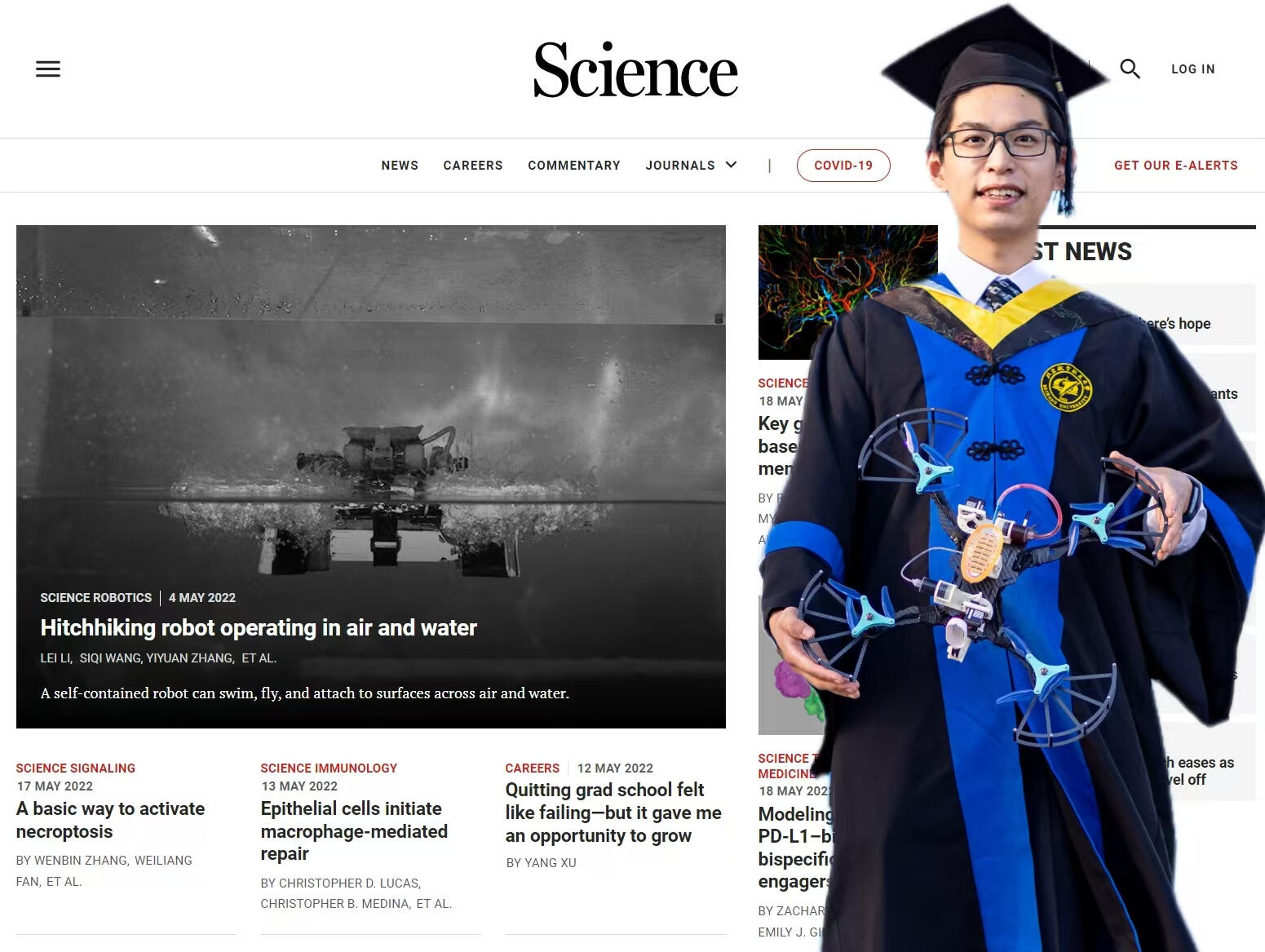
Highlighted as cover Image on Science Homepage
Octopus-Swimming-Like Robot
with Soft Asymmetric Arms
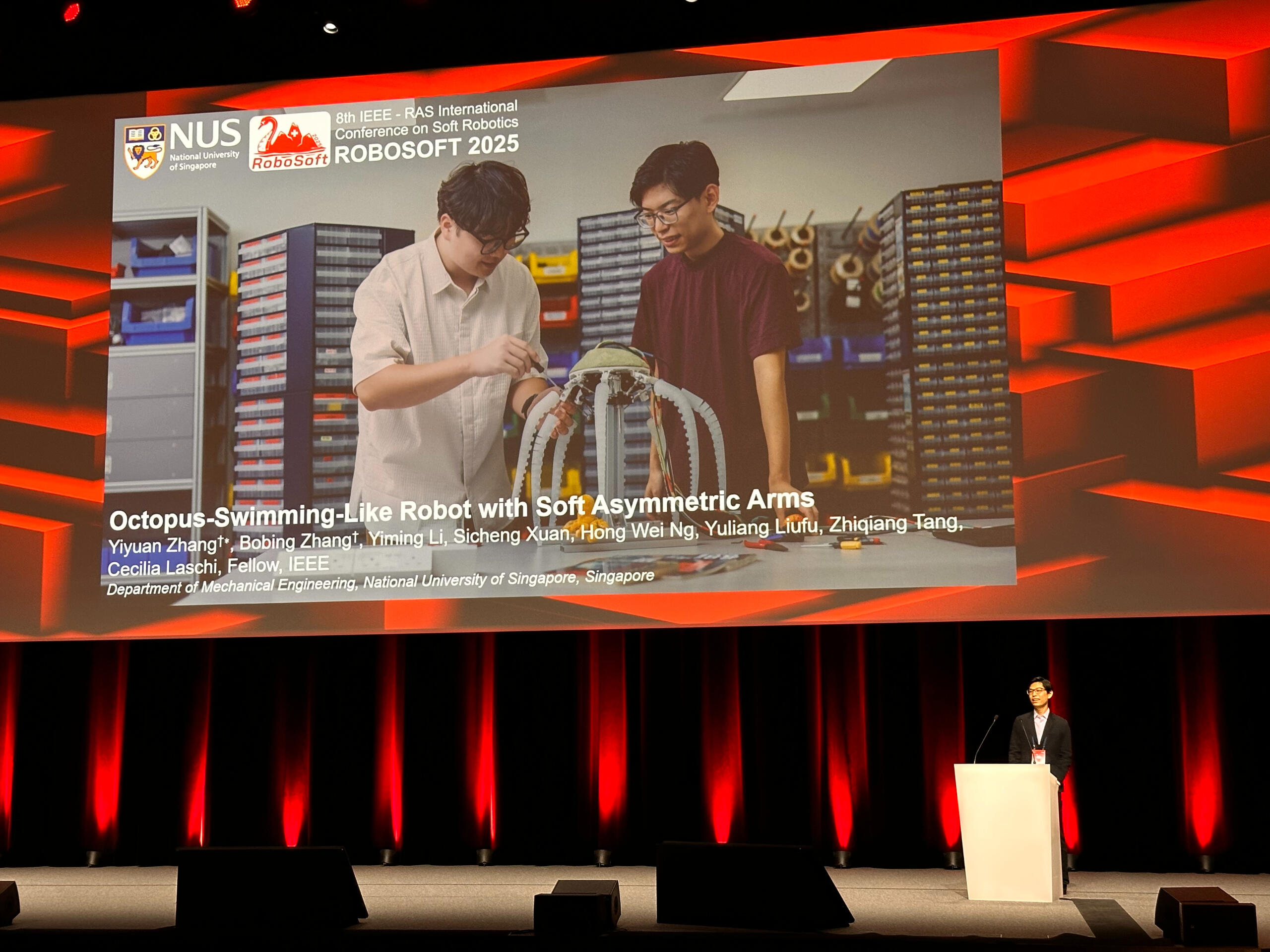
Spotlight Presentation, SwissTech Convention Center, Switzerland
Abstract
Underwater vehicles have seen significant development over the past seventy years. However, bio-inspired propulsion robots are still in their early stages and require greater interdisciplinary collaboration between biologists and roboticists. The octopus, one of the most intelligent marine animals, exhibits remarkable abilities such as camouflaging, exploring, and hunting while swimming with its arms. Although bio-inspired robotics researchers have aimed to replicate these abilities, the complexity of designing an eight-arm bionic swimming platform has posed challenges from the beginning. In this work, we propose a novel bionic robot swimming platform that combines asymmetric passive morphing arms with an umbrella-like quick-return mechanism. Using only two simple constant-speed motors, this design achieves efficient swimming by replicating octopus-like arm movements and stroke time ratios. The robot reached a peak speed of 314 mm/s during its second power stroke. This design reduces the complexity of traditional octopus-like swimming robot actuation systems while maintaining good swimming performance. It offers a more achievable and efficient platform for biologists and roboticists conducting more profound octopus-inspired robotic and biological studies.
Robot Swimming Video
🎉 Honored to be highlighted by Marc Theermann, Chief Strategy Officer at Boston Dynamics.
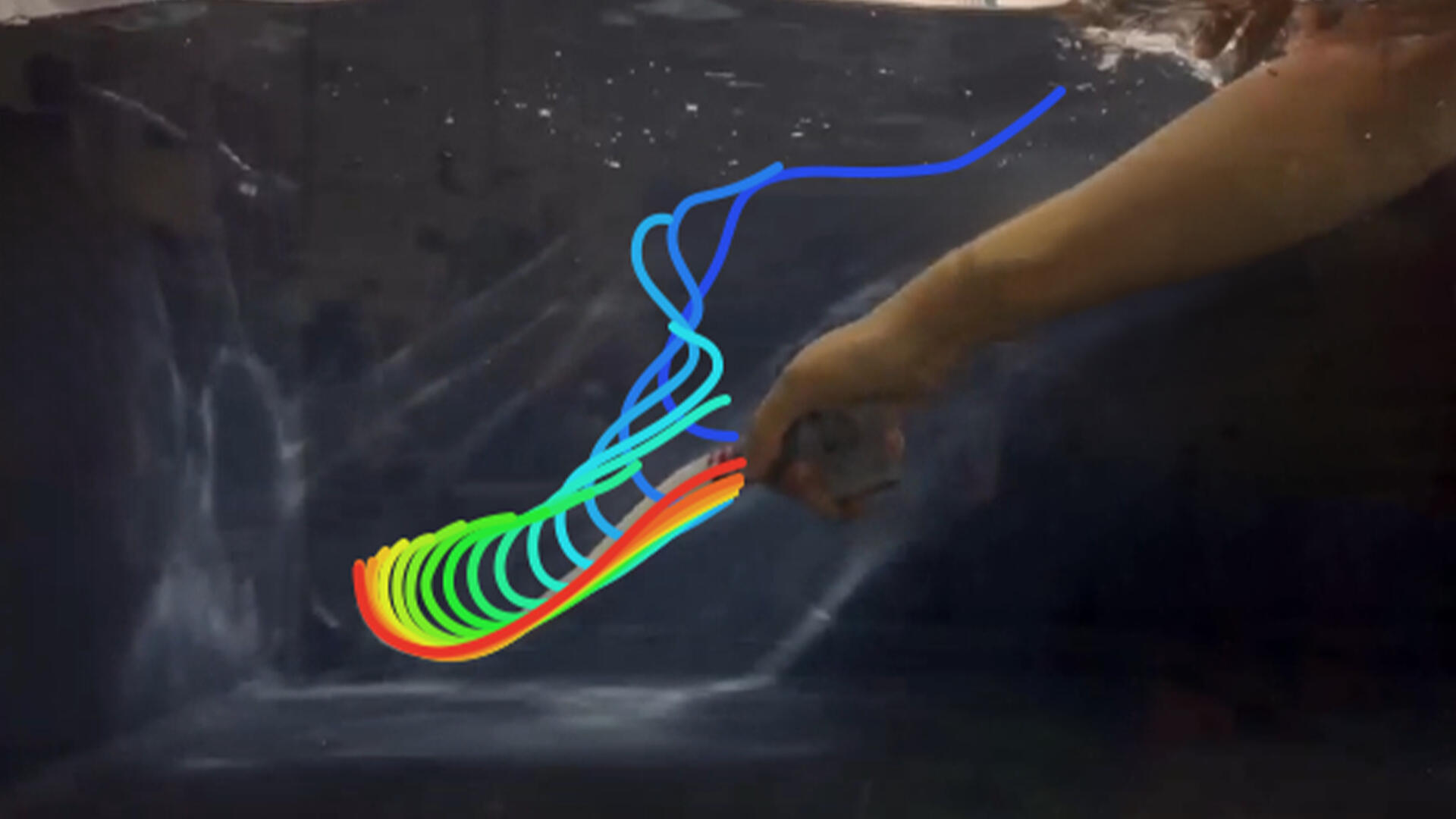
Octopus-like Reaching Motion:
A Perspective Inspired by Whipping

Similarity Between Whipping and Reaching
Abstract
The stereotypical reaching motion of the octopus arm has drawn growing attention for its efficient control of a highly deformable body. Previous studies suggest that its characteristic bend propagation may share underlying principles with the dynamics of a whip. This work investigates whether whip-like passive dynamics in water can reproduce the kinematic features observed in biological reaching and their similarities and differences. Platform-based whipping tests were performed in water and air while systematically varying material stiffness and driving speed. Image-based quantification revealed that the Ecoflex Gel 2 arm driven at 150 rpm (motor speed) reproduced curvature propagation similar to that observed in octopus reaching. However, its bend-point velocity decreased monotonically rather than exhibiting the biological bell-shaped profile, confirming that the octopus reaching movement is not merely a passive whipping behavior. The absence of propagation in air further highlights the critical role of the surrounding medium in forming octopus-like reaching motion. This study provides a new perspective for understand biological reaching movement, and offers a potential platform for future hydrodynamic research.
Supplementary Video
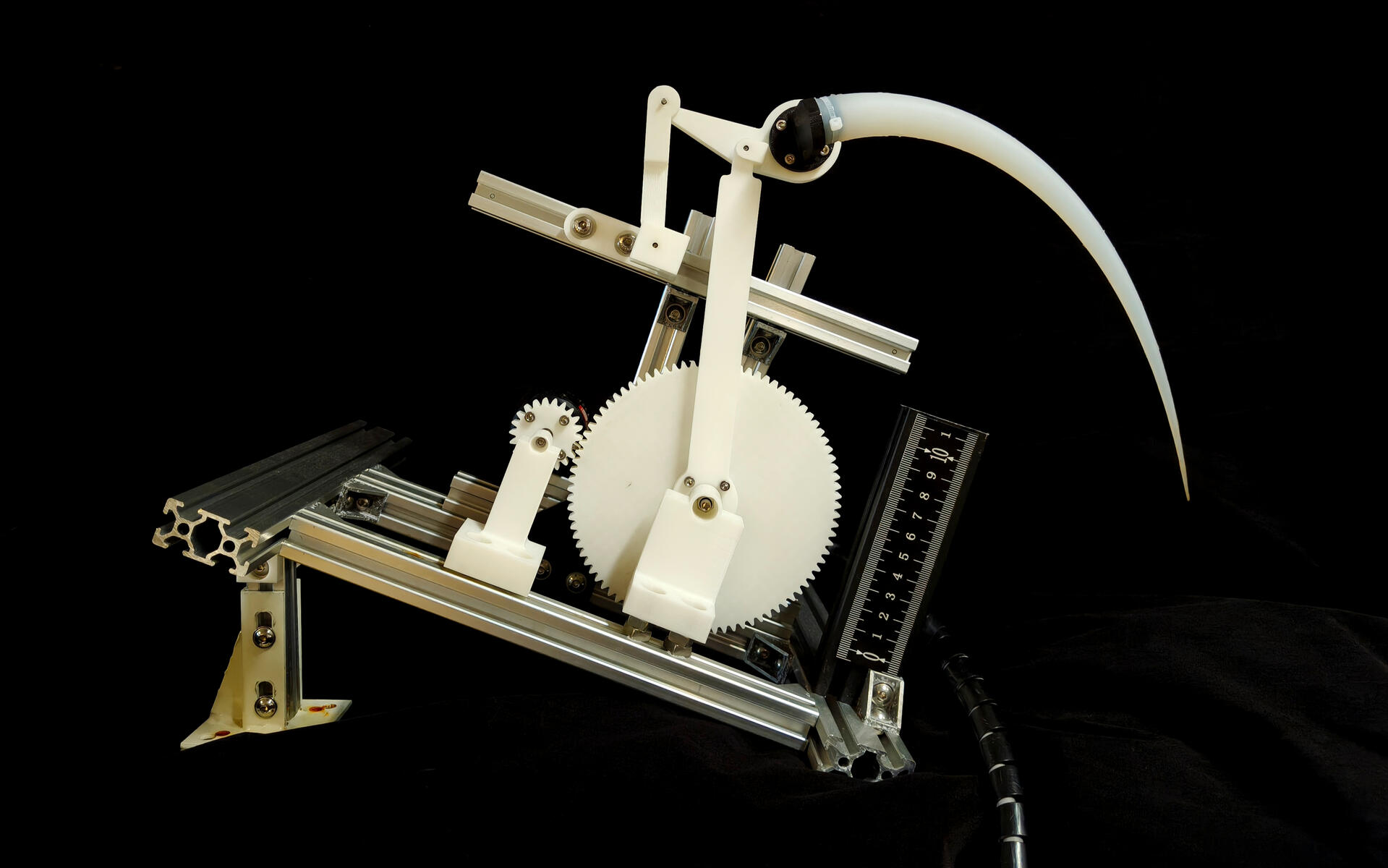
Prototype Image
🎉 Honored to have been selected for an oral presentation in a single-track program.